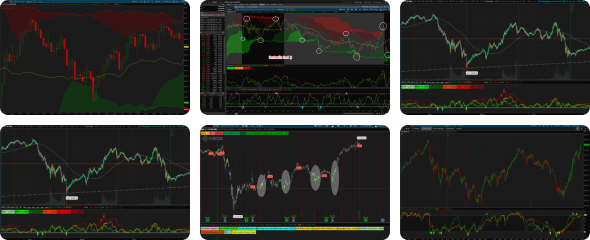
Cumulative Delta Volume Indicator
mod note:
This indicator gives you a sharper read on intraday intent by pairing two simple signals into one clean story: the 5‑minute 20SMA provides trend direction. Don't live home without it.
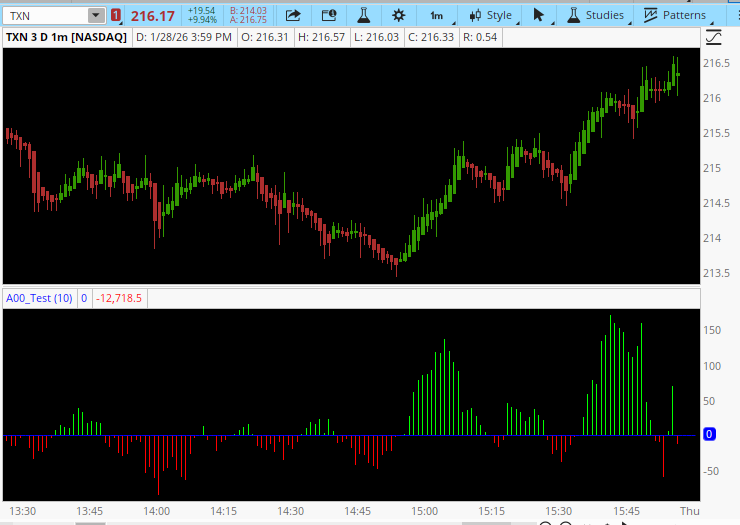
And the 1‑minute Cumulative Volume Delta shows you when real participation hits the tape. When those two line up, the noise drops away — you can actually see buyers defending a level or sellers pressing an advantage before price makes it obvious. It’s a fast, intuitive way to spot momentum turning points without cluttering your chart.
Once you feel how the CVD behaves around the 20SMA, you’ll never look at short‑term trend confirmation the same way.
How To Use
---> On the 1-minute, watch for CVD divergence vs price around the 20SMA
when price dips below but CVD holds higher (or vice versa), that’s your early momentum clue.
--->On the 5-minute, use the 20SMA slope to confirm trend bias
only take 1-minute CVD setups in the same direction as the 5-minute 20SMA.
Basically:
Let the 5-min 20SMA define trend, use the 1-min CVD for timing.
mod note:
This indicator gives you a sharper read on intraday intent by pairing two simple signals into one clean story: the 5‑minute 20SMA provides trend direction. Don't live home without it.
And the 1‑minute Cumulative Volume Delta shows you when real participation hits the tape. When those two line up, the noise drops away — you can actually see buyers defending a level or sellers pressing an advantage before price makes it obvious. It’s a fast, intuitive way to spot momentum turning points without cluttering your chart.
Once you feel how the CVD behaves around the 20SMA, you’ll never look at short‑term trend confirmation the same way.
How To Use
---> On the 1-minute, watch for CVD divergence vs price around the 20SMA
when price dips below but CVD holds higher (or vice versa), that’s your early momentum clue.
--->On the 5-minute, use the 20SMA slope to confirm trend bias
only take 1-minute CVD setups in the same direction as the 5-minute 20SMA.
Basically:
CVD rising + price reclaiming 20SMA = strong buyers stepping in.
CVD dropping + price rejecting 20SMA = sellers in control.
Let the 5-min 20SMA define trend, use the 1-min CVD for timing.
Ruby:
# Cumulative Volume Delta
#
# The length of the accumulation is user controlled. The cumulative bar
# is the sum of the deltas for the past 10 bars. Change that length to
# 252 (a year in days) then plot something like AAPL. Very interesting.
#
# LongShort
# 5.7.2019

declare lower;

input length = 10;

def O = open;
def H = high;
def C = close;
def L = low;
def V = volume;
def Buying = V * (C - L) / (H - L);
def Selling = V * (H - C) / (H - L);
def Delt = buying - selling;

plot Delta = Delt;
Delta.AssignValueColor(if Delta > 0 then Color.GREEN else Color.RED);
Delta.SetPaintingStrategy(PaintingStrategy.HISTOGRAM);
Delta.hide();

plot zero = 0;
zero.setDefaultColor(Color.BLUE);

plot CumulativeVolumeDelta = sum(Delta,length);
CumulativeVolumeDelta.AssignValueColor(if CumulativeVolumeDelta > 0 then Color.GREEN else Color.RED);
CumulativeVolumeDelta.SetPaintingStrategy(PaintingStrategy.HISTOGRAM);

# End Code
Last edited by a moderator: