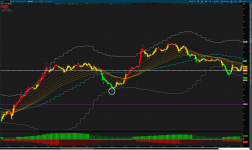
I have reached the end of the World and see the place I started in ThinkOrSwim

Great thread! I'd like to add some of my hard earned knowledge. I don't see the mention of volume profile or order flow. These are the 2 most important indicators one can learn to use. ToS has a paid indicator called BookMap for $39.99 per month that is great for viewing order flow. I think it's money very well spent if you learn the basics of order flow. By using this type of chart, you will always be trading with smart money. As for volume profile, you will always know when the market is balanced or seeking balance. Just my 2 cents ..
yeah there are some GREAT tools that are simply basic necessities and understanding the draw of POC and the slippery power of LVN in the volume profiles will help you make good entries and exits for sure. I also love the OBV on balance volume indicator to spot divergence and the good old tried and true RSI/divergent. I always have up on the side screen, the time and sales when day trading or making critical entries or exits, but have not gotten into the order flow tool - it looks confusing if you can believe that coming from me (have you seen my charts o_0 ) But if you do a lot of reading that tool is supposed to be the bomb...

maybe some good combos?
  • Trend trader = MACD + ADX (trend confirmation) + Volume Profile (where big players are).
  • Swing trader = RSI (timing entries) + OBV (volume confirmation) + Volume Profile.
 

Join useThinkScript to post your question to a community of 21,000+ developers and traders.

As for volume profile, you will always know when the market is balanced or seeking balance. Just my 2 cents ..
I've yet to understand how to use volume profile effectively. I (try) to trade on the 1-minute chart, so I assume I should be using the "DAY" mode. But nothing ever really lines up. I've tried watching a few videos on the subject but always come away more confused.
 
Where is Bookmap helpful through the lens of a trader that uses volume price analysis? ToS has a chart indicator that shows volume at price/VPOC (volume point of control). In other words, what important information is missing from VPOC that you'd get through Bookmap?
 
Best Combo for Scalping: Footprint Charts + Volume Profile​

If you’re scalping, combining Footprint Charts with Volume Profile gives you the best of both worlds — micro and macro-level.
Using one without the other limits their usefulness.

Footprint Charts will provide you with the precision entries that you are looking for.
They show buying/selling volume at each price level within a candle
— identifies strong directional moves and when momentum dries up for quick reversals or exits.

Volume Profile can assist in determining trade entry, but not on scalping charts.
For scalpers, it provides market context.
— It is a roadmap of where big players are active; this is what will drive your trade.
POC (Point of Control): Highest traded volume — strong magnet for price.​
HVNs / LVNs: High-volume = support/resistance; low-volume = fast-move zones.​
Value Area: Main trading zone; look for trades when price moves outside it.​
Yes, Volume Profile needs to be viewed on a higher timeframe; no lower than 1-hr

Footprint charts are available from: Bookmap (a ToS addon), Sierra Chart, or ATAS
If you don’t have access to Footprint charts try one of these ToS built-in indicators:
OBV: Tracks buying/selling pressure — look for divergences.
VWAP: Useful for mean-reversion and breakout signals.
RVOL: High relative volume = potential breakout or reversal zone.

@djgLXXII @vgt2101
 
Last edited:
Yeah, I don't know...I can't find any correlation with this stuff. Everytime I think I've found some combination that works, when I actually try it it fails. Which is frustrating because I can back test things and seemingly get a 60%+ win rate, but when I actually try it for real it fails. It's like someone is watching....
 
This is really cool, but also highlights a common experience I have -- momentum style indicators rarely work out (for me). It often feels like, when "everything lines up", you're entering at the top of a move. That's why I've focused my attention on trying to perfect reversals, since ultimately I want to trade 0DTE SPY options and you need explosive moves and not some slow grind up.
 
This is really cool, but also highlights a common experience I have -- momentum style indicators rarely work out (for me). It often feels like, when "everything lines up", you're entering at the top of a move. That's why I've focused my attention on trying to perfect reversals, since ultimately I want to trade 0DTE SPY options and you need explosive moves and not some slow grind up.
With that being said, sounds like honing price action would be best with key support/resistance levels and those levels that help define institutional buying/selling. Most indicators do lag as we all know, however, price action is and has always been king.
 
I have reached MY answer to an important question, and I am not alone in asking it — many experienced traders here on this site eventually reach this exact realization,

Most indicators are derived from the same data (price and volume), and many are just variations of each other — meaning they tend to behave similarly, especially during the same market regimes.

I have written or adjusted over 200 scripts in the 2 years I have started using TOS. I have in theory made a “sandwich” about as many ways there is to make a “sandwich” and I have come to realize, even though one may taste better to me than others, that they are all the same “sandwich”.

Why Many Indicators "Act the Same"
  1. They’re all based on price and/or volume.
Whether it's RSI, MACD, Stochastic, or CCI, they're just manipulating highs, lows, closes, averages, and ranges.
Most of them are just different smoothing techniques applied to price behavior.
  1. Indicators lag — and they often confirm the same thing.
Many indicators are reactive, not predictive. They confirm momentum, trend, or volatility after price moves. (Like reading the Wall Street Journal and thinking you are now ready for tomorrow trading, lol, NOT)
  1. Multiple indicators ≠ more signal.
Using 5 indicators that say “overbought” doesn’t give you 5x the certainty — just the same information 5 times.

So Should You Use Just 1–2 Indicators?
In many cases, yes — but with intentional diversity. Ideally, you want one indicator per category:

CategoryUse One ToolExamples
TrendDirectional biasMoving Average, ADX
MomentumStrength of price movementRSI, MACD, Stochastic
VolatilityExpansion/contractionATR, Bollinger Bands
Volume-basedConfirmation of price movesOBV, VWAP, Accum/Distrib
Price actionStructure/patternsCandlesticks, pivots, HH/LLs

The Ideal Setup for Clarity
You don’t need 10 indicators — but you do need balance and context. Here’s an example minimalist but high-signal setup:
  1. Price Action + EMAs – tells you trend and structure.
  2. RSI or Stochastic – shows momentum + potential reversal points.
  3. Volume or VWAP – confirms participation.
That’s it. Everything else can clutter, not clarify.

My Final Thought
Instead of stacking indicators, stack edges from different dimensions- price structure, momentum, volatility, and volume. (Maybe throw in MTF for another level of validations)

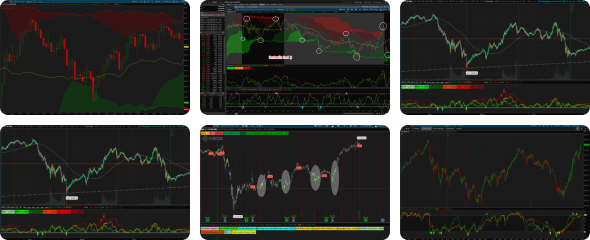
I have developed a Studies Set, but it includes some VIP scripts that I can not share here. This set has done very well this week and will need others to use it to validate its success rate and profit ratio. My suggestion is you join the VIP section, cheap for what you get. I will be writing up directions for use soon. (the only thing extra I might add are the previous day high and lows, they seem 50% of the time to act as support and resistances)

View attachment 25326


mod note:

Is there a link for TOS or code for this chart?
 
This is really cool, but also highlights a common experience I have -- momentum style indicators rarely work out (for me). It often feels like, when "everything lines up", you're entering at the top of a move. That's why I've focused my attention on trying to perfect reversals, since ultimately I want to trade 0DTE SPY options and you need explosive moves and not some slow grind up.
This looks like a pretty good reversal indicator to me. :)

1763759170989.png
 
This looks like a pretty good reversal indicator to me. :)

View attachment 26301
Not sure what you're looking at specifically.

This is what I mean by reversal, and is a textbook example from today on SPY. This is using my own set of custom indicators. They don't always play out like this, and could've kept on running down the bottom bollinger. This is my challenge is trying to find SOMETHING that adds confluence to this. I've tried adding in levels defined by the community but they don't always help and just adds noise.
 

Attachments

  • reversal_example.png
    reversal_example.png
    465.4 KB · Views: 446
Last edited:
Not sure what you're looking at specifically.

This is what I mean by reversal, and is a textbook example from today on SPY. This is using my own set of custom indicators. They don't always play out like this, and could've kept on running down the bottom bollinger. This is my challenge is trying to find SOMETHING that adds confluence to this. I've tried adding in levels defined by the community but they don't always help and just adds noise.
Very interesting chart. May I have the chart setup please?
 
I love this post. After years of chasing the set of indicators that would give me an edge I finally realized there were no shortcuts (at least for me).

Im down to using bollinger bands, rsi and a couple of EMA's.

I am 90% fundamental and 10% charts these days
 
Not sure what you're looking at specifically.

This is what I mean by reversal, and is a textbook example from today on SPY. This is using my own set of custom indicators. They don't always play out like this, and could've kept on running down the bottom bollinger. This is my challenge is trying to find SOMETHING that adds confluence to this. I've tried adding in levels defined by the community but they don't always help and just adds noise.
1763773964612.png


I love the 20 EMA as the entry signal. When I have a cyan candle with market regime confluence and a candle body above the 20 EMA, that's my signal to go long.
 
Last edited:
View attachment 26307

I love the 20 EMA as the entry signal. When I have a cyan candle with market regime confluence and a candle body above the 20 EMA, that's my signal to go long.
Yeah, I guess I still have the beginner's mentality of trying to 'get in at the bottom.' And honestly, the reason is that I struggle to find an entry once the move has already begun. You can get wrecked trading options when entering on large green candles. An experienced trader I follow recommends entering on a red candle at support (for longs), but that's extremely difficult to time.

Thanks for the reply.
 
I have reached MY answer to an important question, and I am not alone in asking it — many experienced traders here on this site eventually reach this exact realization,

Most indicators are derived from the same data (price and volume), and many are just variations of each other — meaning they tend to behave similarly, especially during the same market regimes.

I have written or adjusted over 200 scripts in the 2 years I have started using TOS. I have in theory made a “sandwich” about as many ways there is to make a “sandwich” and I have come to realize, even though one may taste better to me than others, that they are all the same “sandwich”.

Why Many Indicators "Act the Same"
  1. They’re all based on price and/or volume.
Whether it's RSI, MACD, Stochastic, or CCI, they're just manipulating highs, lows, closes, averages, and ranges.
Most of them are just different smoothing techniques applied to price behavior.
  1. Indicators lag — and they often confirm the same thing.
Many indicators are reactive, not predictive. They confirm momentum, trend, or volatility after price moves. (Like reading the Wall Street Journal and thinking you are now ready for tomorrow trading, lol, NOT)
  1. Multiple indicators ≠ more signal.
Using 5 indicators that say “overbought” doesn’t give you 5x the certainty — just the same information 5 times.

So Should You Use Just 1–2 Indicators?
In many cases, yes — but with intentional diversity. Ideally, you want one indicator per category:

CategoryUse One ToolExamples
TrendDirectional biasMoving Average, ADX
MomentumStrength of price movementRSI, MACD, Stochastic
VolatilityExpansion/contractionATR, Bollinger Bands
Volume-basedConfirmation of price movesOBV, VWAP, Accum/Distrib
Price actionStructure/patternsCandlesticks, pivots, HH/LLs

The Ideal Setup for Clarity
You don’t need 10 indicators — but you do need balance and context. Here’s an example minimalist but high-signal setup:
  1. Price Action + EMAs – tells you trend and structure.
  2. RSI or Stochastic – shows momentum + potential reversal points.
  3. Volume or VWAP – confirms participation.
That’s it. Everything else can clutter, not clarify.

My Final Thought
Instead of stacking indicators, stack edges from different dimensions- price structure, momentum, volatility, and volume. (Maybe throw in MTF for another level of validations)

I have developed a Studies Set, but it includes some VIP scripts that I can not share here. This set has done very well this week and will need others to use it to validate its success rate and profit ratio. My suggestion is you join the VIP section, cheap for what you get. I will be writing up directions for use soon. (the only thing extra I might add are the previous day high and lows, they seem 50% of the time to act as support and resistances)

View attachment 25326


mod note:
Is there a dl link to this ?
 
Thread starter Similar threads Forum Replies Date
S Defining Start & End Times In ThinkOrSwim Tutorials 0
M Where In The World Is Ruby? Tutorials 1

Similar threads

Not the exact question you're looking for?

Start a new thread and receive assistance from our community.

87k+ Posts
875 Online
Create Post

Similar threads

Similar threads

The Market Trading Game Changer

Join 2,500+ subscribers inside the useThinkScript VIP Membership Club
  • Exclusive indicators
  • Proven strategies & setups
  • Private Discord community
  • ‘Buy The Dip’ signal alerts
  • Exclusive members-only content
  • Add-ons and resources
  • 1 full year of unlimited support

Frequently Asked Questions

What is useThinkScript?

useThinkScript is the #1 community of stock market investors using indicators and other tools to power their trading strategies. Traders of all skill levels use our forums to learn about scripting and indicators, help each other, and discover new ways to gain an edge in the markets.

How do I get started?

We get it. Our forum can be intimidating, if not overwhelming. With thousands of topics, tens of thousands of posts, our community has created an incredibly deep knowledge base for stock traders. No one can ever exhaust every resource provided on our site.

If you are new, or just looking for guidance, here are some helpful links to get you started.

What are the benefits of VIP Membership?
VIP members get exclusive access to these proven and tested premium indicators: Buy the Dip, Advanced Market Moves 2.0, Take Profit, and Volatility Trading Range. In addition, VIP members get access to over 50 VIP-only custom indicators, add-ons, and strategies, private VIP-only forums, private Discord channel to discuss trades and strategies in real-time, customer support, trade alerts, and much more. Learn all about VIP membership here.
How can I access the premium indicators?
To access the premium indicators, which are plug and play ready, sign up for VIP membership here.
Back
Top