I did not see an instance of this indicator posted to this forum, so I thought I would add one here. Apologies in advance if I missed a previously posted one.
Dr Ehlers states the following in his article, "Correlation As a Trend Indicator":
"Just imagine correlating prices with a straight line having a positive slope. If the price trend is up, the correlation is nearly +1. If the price trend is down, there is anticorrelation and the correlation is nearly -1. If the price trend is sideways, or if prices are oscillating, there is no correlation over the span of the correlation period. These conditions pretty much describe an ideal trend indicator. The indicator output is even limited in its range between -1 and +1, so it can be applied universally to any security symbol... ... The correlation trend indicator can be adjusted to accommodate the expected trade holding period. For example, if you want to hold a trade for about a month you could use a 20 bar correlation period. If your expected holding period is on the order of a quarter year you could use a 40 to 60 bar correlation period. Since the lag of the correlation indicator is approximately half the correlation period, a trader could identify the onset of a trend with a shorter correlation period and then extend the correlation period as the trend develops. Correspondingly, a trader could detect the failure of the trend sooner by decreasing the correlation period. "
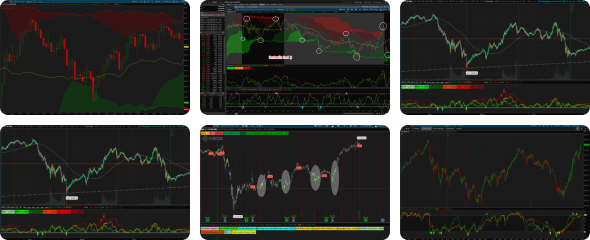
Dr Ehler's goes on to provide an example of SPY(D) chart that shows as he states, "Trends Are Clearly Identified Using a 20 bar Correlation Period", "The Correlation Trend Indicator is Smoother Using a 40 bar Correlation Period", and "Trend Onsets and Failures Are More Quickly Identified Using a 10 bar Correlation Period". The attached screenshot has three instances of the indicator on the lower portion of the chart. One at period 10, one at period 20 and one at period 40 to show what the indicator looks like.

Dr Ehlers states the following in his article, "Correlation As a Trend Indicator":
"Just imagine correlating prices with a straight line having a positive slope. If the price trend is up, the correlation is nearly +1. If the price trend is down, there is anticorrelation and the correlation is nearly -1. If the price trend is sideways, or if prices are oscillating, there is no correlation over the span of the correlation period. These conditions pretty much describe an ideal trend indicator. The indicator output is even limited in its range between -1 and +1, so it can be applied universally to any security symbol... ... The correlation trend indicator can be adjusted to accommodate the expected trade holding period. For example, if you want to hold a trade for about a month you could use a 20 bar correlation period. If your expected holding period is on the order of a quarter year you could use a 40 to 60 bar correlation period. Since the lag of the correlation indicator is approximately half the correlation period, a trader could identify the onset of a trend with a shorter correlation period and then extend the correlation period as the trend develops. Correspondingly, a trader could detect the failure of the trend sooner by decreasing the correlation period. "
Dr Ehler's goes on to provide an example of SPY(D) chart that shows as he states, "Trends Are Clearly Identified Using a 20 bar Correlation Period", "The Correlation Trend Indicator is Smoother Using a 40 bar Correlation Period", and "Trend Onsets and Failures Are More Quickly Identified Using a 10 bar Correlation Period". The attached screenshot has three instances of the indicator on the lower portion of the chart. One at period 10, one at period 20 and one at period 40 to show what the indicator looks like.